The dining room is more than just a place where family members sit together for meals. It is a space for conversations, celebrations and spending quality time with family and friends.
A well-designed dining area should feel comfortable, look inviting and fit naturally into the overall interior of your home. From selecting the right dining table to planning lighting, storage and wall finishes, every detail contributes to the final appearance.
In modern apartments and homes in Greater Noida, dining spaces are often connected to living rooms or kitchens. This makes thoughtful space planning particularly important.
Whether you have a separate dining room or a compact dining corner, the right interior design can help you create a functional and attractive space.
In this guide, we will explore modern dining room design ideas, furniture options, lighting, storage solutions and practical planning tips.
1. Choose the Right Dining Room Layout
Start by understanding the available space and how the dining area connects with other rooms.
The layout should allow people to sit comfortably, move around the table and access nearby areas without obstruction.
Separate Dining Room
If your home has a dedicated dining room, you have more flexibility in selecting the table size, seating arrangement, lighting and storage furniture.
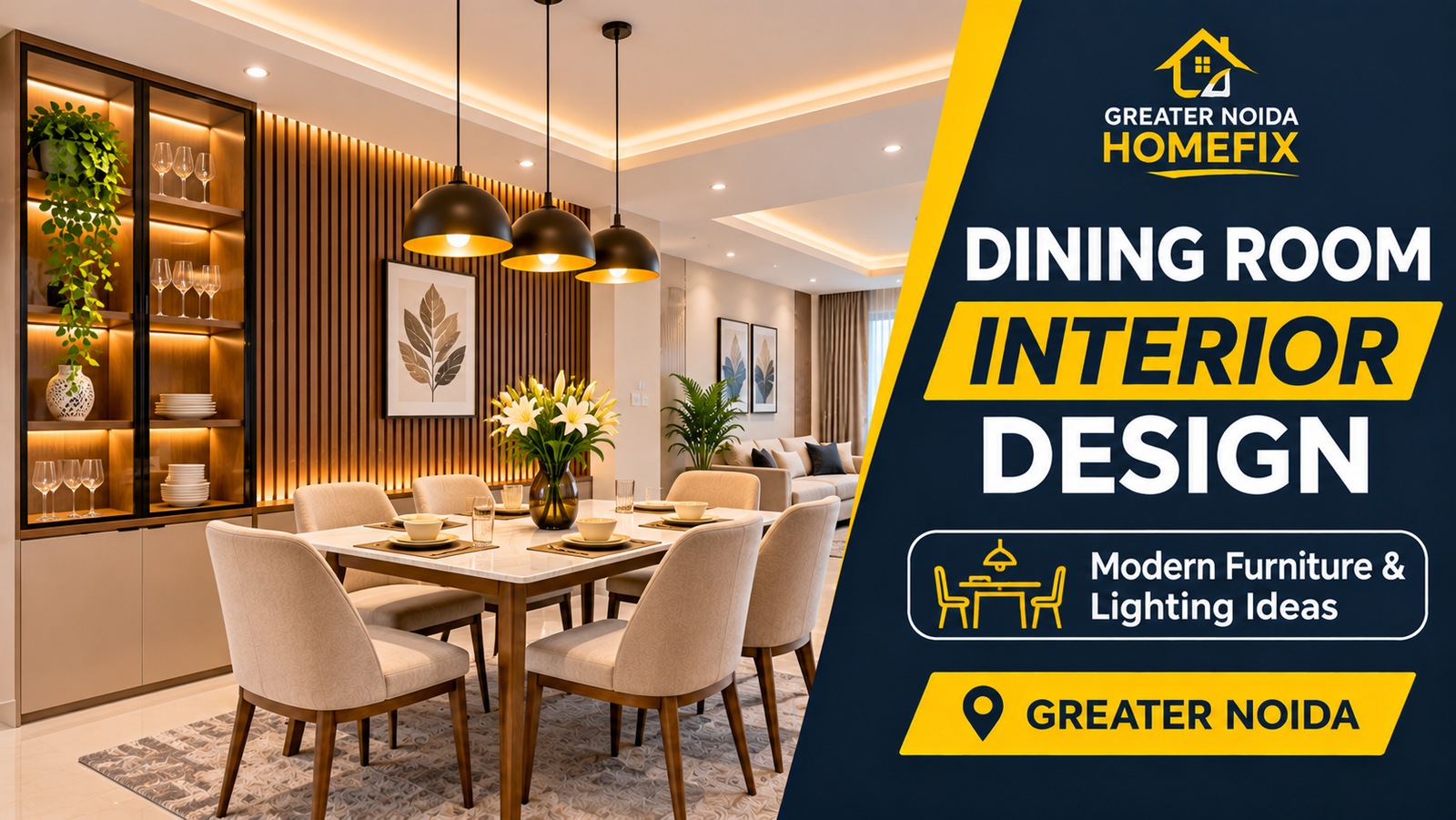
Consider a coordinated design with a dining table, chairs, a feature wall and a crockery unit.
Open-Plan Dining Area
In many modern apartments, the dining area is connected to the living room or kitchen.
You can visually define the dining zone using:
- A pendant light above the dining table.
- A feature wall or decorative panel.
- A coordinated rug, where practical.
- A crockery or display unit.
- Furniture placement that maintains comfortable movement.
The objective is to create a distinct dining space without making the overall layout feel crowded.
Compact Dining Corner
Smaller homes can benefit from carefully selected furniture.
Consider a compact four-seater table, a wall-side arrangement or a suitable bench seating design to make better use of available space.
2. Select the Right Dining Table
The dining table is usually the central element of the room.
Its size, shape and material should complement the available space and the number of people who regularly use it.
Rectangular Dining Tables
Rectangular tables are versatile and work well in many dining rooms. They are suitable for larger families and can be positioned along the length of a room.
Round Dining Tables
Round tables can work well in compact or square dining areas. They create a more conversational seating arrangement and avoid sharp corners.
Square Dining Tables
Square tables are suitable for smaller dining areas where a balanced four-seater arrangement is preferred.
Extendable Dining Tables
An extendable table can provide additional seating when required while occupying less space during everyday use.
Before selecting a table, check its dimensions along with the space needed for chairs and comfortable movement.
3. Choose Dining Chairs for Comfort and Style
Dining chairs should complement the table while providing comfortable seating.
Some popular options include:
Upholstered Chairs: Offer a softer seating experience and can introduce colour or texture.
Wooden Chairs: Provide a timeless appearance and can complement different interior styles.
Modern Minimalist Chairs: Work well in contemporary dining areas with clean lines and simple furniture.
Bench Seating: Can be useful in selected layouts, particularly when the dining table is positioned against a wall.
Pay attention to seat height, back support, material and ease of maintenance.
4. Create an Attractive Dining Feature Wall
A thoughtfully designed wall can become the visual highlight of your dining area.
Consider these options:
Wooden Wall Panels
Wooden panels introduce warmth and texture and can complement wooden dining furniture.
Fluted Panels
Fluted wall designs add subtle patterns and work well in modern interiors.
Decorative Mirrors
Mirrors can help reflect light and create a sense of openness, particularly in compact dining areas.
Wallpaper and Textured Finishes
Wallpaper and decorative paint finishes can introduce colour and character without requiring bulky furniture.
Wall Art
A carefully selected artwork or a coordinated collection of frames can make the dining area feel more personal.
Choose a feature wall design that complements the living room and kitchen if these spaces are connected.
5. Plan the Right Dining Room Lighting
Lighting plays an important role in creating the atmosphere of a dining area.
A well-planned arrangement should provide sufficient visibility while making the dining table a visual focal point.
Pendant Lights
Pendant lights above the dining table are a popular choice for modern dining spaces.
Select a fixture that is proportionate to the table size and does not obstruct the view across the table.
Chandeliers
A chandelier can introduce a decorative element in a larger dining room, provided the ceiling height and room proportions allow it.
Cove Lighting
Concealed LED lighting around selected ceiling sections can create a soft ambient effect.
Recessed Ceiling Lights
Recessed lights can provide general illumination and complement decorative fixtures.
Avoid relying on decorative lighting alone. The dining area should remain sufficiently illuminated for everyday use.
6. Add a Functional Crockery and Display Unit
A crockery unit can provide useful storage while complementing the dining room design.
Depending on the available space, consider:
- Closed cabinets for crockery and serving items.
- Glass shutters for selected display sections.
- Open shelves for decorative accessories.
- Drawers for cutlery and dining essentials.
- Integrated lighting for display niches.
For compact dining spaces, a wall-mounted storage unit may be more suitable than a large floor-standing cabinet.
Plan cabinet dimensions around the available wall space and ensure doors and drawers can open comfortably.
7. Select Colours and Materials Carefully
The dining area should coordinate with the rest of your home, particularly when it is part of an open-plan layout.
Some combinations worth considering include:
Beige and Wood: Creates a warm and balanced appearance.
White and Grey: Suitable for contemporary and minimalist interiors.
Walnut and Cream: Adds warmth and a richer visual character.
Navy Blue and Beige: Introduces contrast and can create a distinctive feature wall.
Natural Wood and Green: Offers a subtle connection with natural textures.
Material selection should also consider maintenance, cleaning and everyday usage.
8. Make Small Dining Areas Look Spacious
A compact dining area can still be comfortable and attractive with the right planning.
Try these practical ideas:
- Choose a table that fits the available floor area.
- Consider round or extendable tables where suitable.
- Use wall-mounted shelves instead of bulky storage furniture.
- Select visually light chairs.
- Use mirrors thoughtfully to reflect light.
- Maintain comfortable movement around the dining table.
- Avoid excessive decorative elements.
- Coordinate furniture colours with the surrounding interior.
The goal is to create a dining space that feels open and remains convenient for everyday use.
9. Common Dining Room Design Mistakes to Avoid
Even an attractive dining room can become inconvenient when practical requirements are overlooked.
Avoid these common mistakes:
- Selecting an oversized dining table.
- Not leaving enough space for chairs.
- Choosing uncomfortable dining furniture.
- Installing a pendant light at an unsuitable height.
- Ignoring storage requirements.
- Using too many contrasting finishes.
- Blocking access to nearby doors or kitchen areas.
- Not coordinating the dining area with the living room.
- Overcrowding the space with decorative furniture.
A successful dining room should balance aesthetics, comfort and functionality.
10. Why Professional Dining Area Planning Matters
Every home has different dimensions, layouts and family requirements.
Professional planning helps coordinate the dining table, seating, storage, lighting and surrounding interiors.
This can include:
- Dining area measurements and layout.
- Dining table and chair selection.
- Crockery unit and display storage.
- Feature wall design.
- Ceiling and lighting arrangements.
- Material and finish selection.
- Coordination with the living room and kitchen.
Greater Noida Homefix provides interior design solutions for homeowners looking to create coordinated and functional living spaces.
11. Planning Dining Room Interior Design in Greater Noida?
Whether you have a separate dining room or a compact dining corner connected to your living room, the right design can make the space more comfortable and inviting.
From modern dining furniture and crockery units to decorative walls and lighting, every element should work together with the overall interior of your home.
Greater Noida Homefix helps homeowners plan interior spaces according to their available area, design preferences and practical requirements.
Planning a dining area makeover?
Contact Greater Noida Homefix to discuss your requirements and explore suitable interior design solutions.
Call: +91 96432 87068
WhatsApp: https://wa.me/919643287068
Website: https://greaternoidahomefix.com/