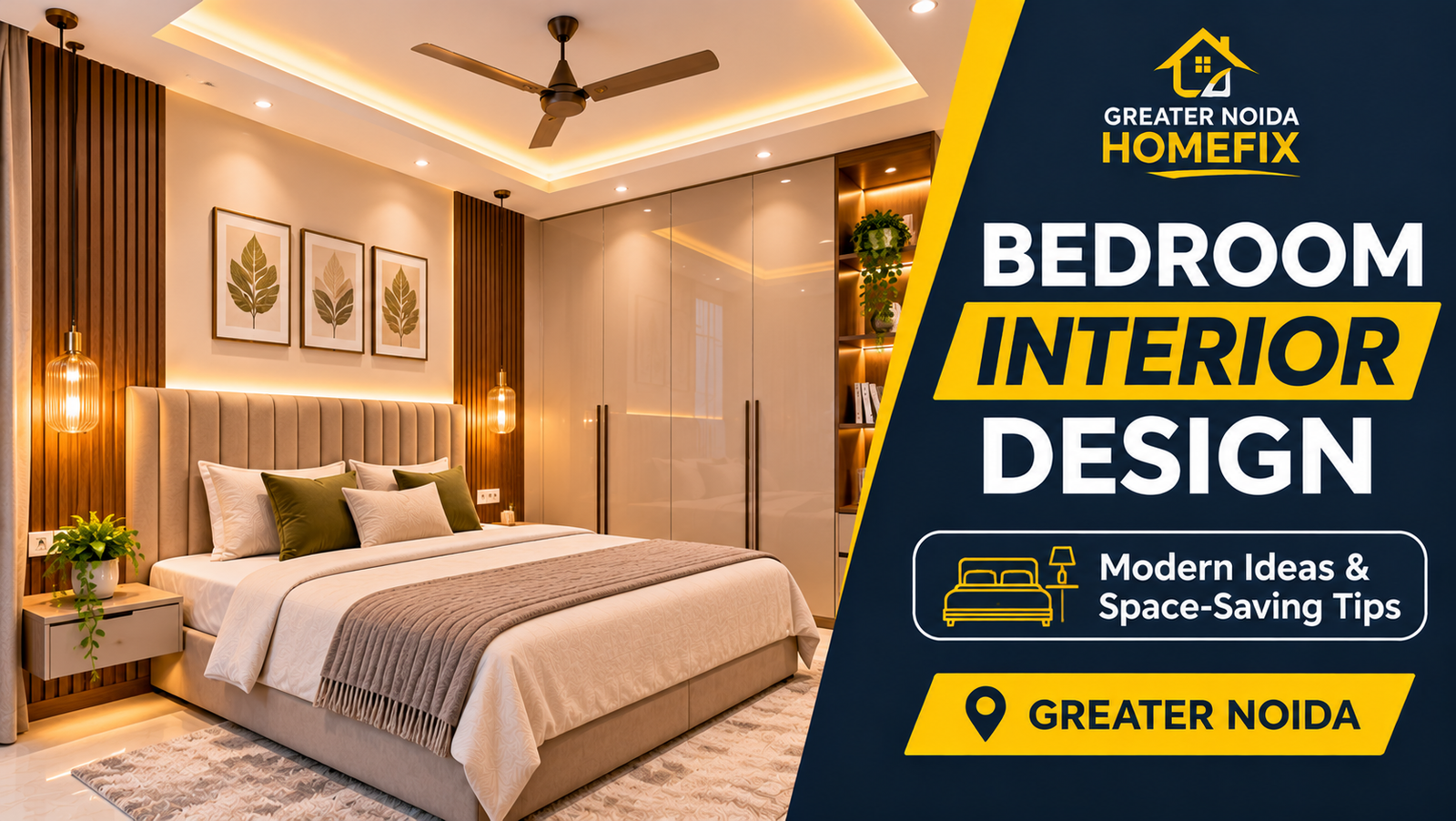
Your bedroom should be more than just a place to sleep. It should be a comfortable, organised and relaxing space that reflects your personal style and supports your everyday routine.
A well-designed bedroom combines furniture, lighting, colours, storage and thoughtful space planning. Even a relatively small bedroom can feel spacious and attractive when every element is planned properly.
Whether you are moving into a new apartment in Greater Noida or renovating your existing bedroom, the right interior design can make a noticeable difference.
In this guide, we will explore modern bedroom interior design ideas, wardrobe styles, colour combinations, lighting options and practical tips for making better use of your available space.
1. Start with a Practical Bedroom Layout
Before selecting furniture or decorative elements, understand the dimensions and layout of your bedroom.
The placement of the bed, wardrobe, side tables and other furniture should allow comfortable movement throughout the room.
Consider these points:
- Position the bed according to the room dimensions and door placement.
- Maintain comfortable walking space around the bed.
- Plan wardrobe placement without blocking windows or access points.
- Consider the location of electrical switches and sockets.
- Allow enough space for opening wardrobe doors and drawers.
- Make use of available wall space for storage.
A practical layout creates a comfortable foundation for the rest of the bedroom design.
2. Choose a Modern Bed Back Wall Design
The wall behind the bed is often the main visual feature of a bedroom.
A thoughtfully designed headboard wall can give the room a more complete and coordinated appearance.
Upholstered Headboard
An upholstered headboard introduces a soft, comfortable element and can complement contemporary bedroom furniture.
Wooden Wall Panels
Wooden panels or slats add warmth and texture. They can be used across the full wall or as a selected feature behind the bed.
Fluted Wall Panels
Fluted panels create vertical or linear patterns that work well with modern bedroom interiors.
Wallpaper and Decorative Finishes
Wallpaper and textured finishes provide another way to introduce patterns and colours without adding bulky furniture.
Integrated Bedside Lighting
Wall-mounted lights or selected LED lighting can complement the headboard design while keeping bedside surfaces organised.
Choose a design that complements the bed, wardrobe finish and overall colour scheme.
3. Plan the Right Bedroom Wardrobe
A wardrobe is one of the most important furniture elements in a bedroom. It should provide sufficient storage without making the room feel crowded.
Popular wardrobe options include:
Sliding Door Wardrobes
Sliding wardrobes are useful when there is limited clearance in front of the wardrobe.
They offer a clean appearance and can be customised with different finishes and internal storage arrangements.
Hinged Door Wardrobes
Hinged wardrobes provide convenient access to individual sections and are suitable when sufficient opening space is available.
Floor-to-Ceiling Wardrobes
These wardrobes use vertical space and provide additional storage for luggage, seasonal clothing and other belongings.
Wardrobe with Dressing Unit
A customised wardrobe can incorporate a dressing mirror, drawers and accessory storage into one coordinated design.
Plan the wardrobe according to your clothing requirements, room dimensions and available budget.
4. Select Bedroom Colours That Create the Right Atmosphere
Colour selection influences how a bedroom looks and feels.
The right combination should complement the furniture, lighting, flooring and natural light available in the room.
Some popular combinations include:
Beige and White: A soft, neutral combination that creates a clean and balanced appearance.
Grey and White: Suitable for contemporary bedrooms with minimal furniture and simple finishes.
Sage Green and Cream: Introduces a subtle natural tone without making the room visually overwhelming.
Navy Blue and Beige: Creates contrast and can work well as an accent combination.
Wood and Off-White: Adds warmth while maintaining a bright and understated look.
For smaller bedrooms, lighter wall colours and coordinated furniture finishes can help create a more open visual appearance.
5. Choose Lighting for Comfort and Functionality
Bedroom lighting should support different activities, from relaxing to reading and getting ready.
Instead of depending on one bright ceiling light, consider a combination of lighting types.
General Lighting
Ceiling lights provide overall illumination throughout the room.
Bedside Lighting
Wall-mounted lights or bedside lamps are useful for reading and other activities.
Cove Lighting
Concealed LED strips can create a soft ambient effect around selected ceiling sections.
Wardrobe Lighting
Internal wardrobe lighting can make it easier to find clothes and accessories.
Dressing Area Lighting
Suitable lighting around the mirror can improve visibility when getting ready.
Choose appropriate light colour temperatures according to the purpose of each area.
6. Make Small Bedrooms Look More Spacious
Small bedrooms require careful furniture and storage planning.
A few practical design choices can help make better use of limited space.
- Choose furniture that is proportionate to the room.
- Consider sliding wardrobes where door clearance is limited.
- Use vertical storage instead of adding unnecessary floor cabinets.
- Select light and coordinated colour combinations.
- Consider wall-mounted bedside tables.
- Use mirrors thoughtfully to create a sense of openness.
- Avoid overcrowding the room with decorative furniture.
- Plan storage underneath the bed where practical.
The objective is to create a bedroom that feels comfortable and easy to move around in.
7. Consider a False Ceiling for Your Bedroom
A false ceiling can introduce lighting and decorative details into a bedroom.
Popular options include:
- Simple gypsum ceiling designs.
- Minimal ceiling borders.
- Cove lighting around selected sections.
- Subtle layered ceiling designs.
- Recessed LED lighting.
Before finalising the design, check the available ceiling height and coordinate the layout with fans, air-conditioning units and lighting requirements.
A simple design is often a better choice than an unnecessarily complicated ceiling, particularly in smaller bedrooms.
8. Select Furniture and Storage Carefully
Bedroom furniture should support your daily routine without taking up unnecessary space.
Some useful additions include:
Bedside Tables: Provide convenient storage for everyday essentials.
Dressing Units: Combine a mirror, drawers and storage for personal accessories.
Study or Work Desk: Useful when the bedroom also needs to accommodate a small working area.
Storage Beds: Provide additional storage for items that are not used frequently.
Wall Shelves: Offer space for books and selected decorative objects.
Select furniture based on actual requirements rather than adding pieces simply to fill empty spaces.
9. Common Bedroom Interior Design Mistakes to Avoid
Even attractive bedroom designs can become inconvenient if practical details are overlooked.
Avoid these common mistakes:
- Choosing oversized furniture for a compact bedroom.
- Not planning sufficient wardrobe storage.
- Ignoring electrical points and bedside switches.
- Using too many colours and decorative finishes.
- Poor placement of lighting fixtures.
- Blocking natural light with furniture.
- Not checking wardrobe door clearance.
- Installing a deep false ceiling without checking ceiling height.
- Not coordinating the bed, wardrobe and headboard design.
A successful bedroom design should balance appearance, comfort and functionality.
10. Why Professional Bedroom Interior Planning Matters
Every bedroom has different dimensions, furniture requirements and storage needs.
Professional planning helps coordinate different elements before installation begins.
This may include:
- Room measurements and furniture layout.
- Bed and headboard wall design.
- Customised wardrobe planning.
- Material and finish selection.
- Lighting and electrical requirements.
- False ceiling design.
- Dressing and additional storage solutions.
Greater Noida Homefix provides interior design solutions for homeowners looking to create practical and contemporary bedroom spaces.
11. Planning Bedroom Interior Design in Greater Noida?
Whether you are designing a new bedroom or renovating an existing one, start by understanding how you use the space and what improvements you need.
From modern wardrobes and bed back wall designs to lighting, false ceilings and complete bedroom interiors, every element should work together.
Greater Noida Homefix helps homeowners explore bedroom interior solutions based on their available space, design preferences and requirements.
Planning a bedroom makeover?
Contact Greater Noida Homefix to discuss your bedroom dimensions, storage needs and preferred design style.
Call: +91 96432 87068
WhatsApp: https://wa.me/919643287068
Website: https://greaternoidahomefix.com/